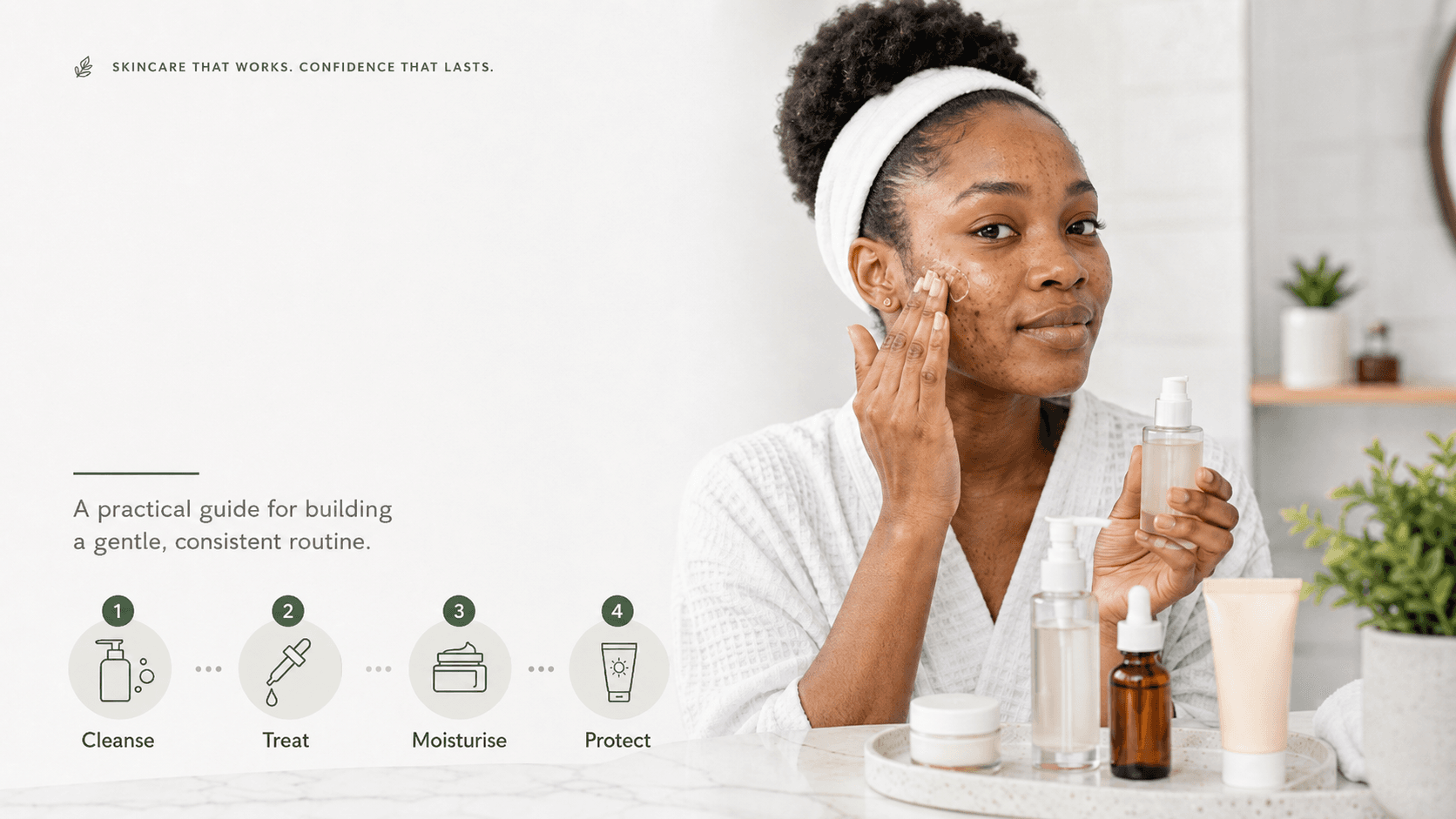
Skincare Routine for Acne-Prone Skin: What to Use, What to Avoid
Build a simple skincare routine for acne-prone skin with clear morning and evening steps, ingredient guidance, and practical tips for Nigeria’s hot and humid climate.
A Simple Skincare Routine for Acne-Prone Skin in Nigeria
Acne-prone skin does not need a crowded shelf or a new product every week. It needs a routine you can follow consistently, with products that cleanse gently, support the skin barrier, address your main concern, and protect your skin from the sun.
This guide explains how to build a practical morning and evening routine for acne-prone skin, especially in Nigeria’s hot and humid climate.
Table of Contents
What acne-prone skin means
Common acne triggers
Five rules to follow before starting
Morning routine for acne-prone skin
Evening routine for acne-prone skin
Ingredients to look for
Ingredients and habits to approach carefully
Weekly care
Lifestyle factors that may affect acne
Frequently asked questions
Shop acne-prone skin products
What Is Acne-Prone Skin?
Acne-prone skin develops blackheads, whiteheads, pimples, or deeper inflamed spots more frequently than other skin types.
Breakouts can develop when excess oil and dead skin cells block a hair follicle. Inflammation and acne-associated bacteria may then contribute to redness, swelling, and visible spots.
After a breakout heals, it may leave a dark mark known as post-inflammatory hyperpigmentation, or PIH. These marks are common on darker skin tones and may remain visible for weeks or months.
Acne is not caused by poor hygiene. Washing your face more often or scrubbing harder will not necessarily clear it and may leave your skin irritated.
Common Acne Triggers
Different people have different triggers. Common factors include:
Excess oil production
Hormonal changes
Stress
Hot and humid weather
Heavy or unsuitable skincare products
Frequently touching or picking the face
Hair oils and styling products touching the skin
Using several strong treatments at once
Cleansing or exfoliating too aggressively
Your routine should reduce pore buildup while keeping the skin barrier comfortable.
Five Rules to Follow Before Starting
1. Keep the Routine Simple
A basic routine can include a cleanser, moisturiser, sunscreen, and one treatment product.
Using too many products makes it harder to identify what is helping or irritating your skin.
2. Introduce One Product at a Time
Add one new product and observe your skin before introducing another.
Patch-test new products when possible, especially exfoliating acids, retinoids, benzoyl peroxide, and fragranced formulas.
3. Avoid Over-Cleansing
Washing your face repeatedly may leave it dry, tight, and irritated.
Cleanse twice a day unless a dermatologist has advised otherwise. People with dry or sensitive skin may prefer to rinse with water in the morning and use cleanser at night.
4. Use Moisturiser Even If Your Skin Is Oily
Oily skin still needs hydration.
Choose a lightweight moisturiser labelled non-comedogenic or suitable for acne-prone skin. Moisturiser can also reduce dryness caused by acne treatments.
5. Wear Sunscreen Every Morning
Sun exposure can make post-acne marks more noticeable and may cause them to last longer.
Use a broad-spectrum sunscreen with at least SPF 30. Reapply when spending long periods outdoors, sweating heavily, or wiping your face.
Morning Skincare Routine for Acne-Prone Skin
Your morning routine should remove excess oil, support the skin barrier, and protect your skin from sun exposure.
Step 1: Cleanse Gently
Use a mild gel or foaming cleanser that removes sweat and excess oil without leaving your skin tight.
Look for ingredients such as:
Ceramides
Glycerin
Hyaluronic acid
Niacinamide
Low-strength salicylic acid
Avoid harsh scrubs and strongly fragranced cleansers if your skin is already irritated.
Product option:
Face Facts Ceramide Oil Control Foaming Cleanser 400ml
This cleanser contains ceramides, niacinamide, and hyaluronic acid. It may suit oily or combination skin that needs cleansing without a heavy finish.
How to use it:
Wet your face with lukewarm water.
Massage the cleanser gently over your skin for about 30 seconds.
Rinse thoroughly.
Pat your face dry with a clean towel.
Step 2: Apply a Treatment Serum
A treatment serum can help with excess oil, uneven tone, or the appearance of post-acne marks.
Niacinamide is a common starting option because it can support the skin barrier and may improve the appearance of oiliness and uneven skin tone.
Product option:
The Ordinary Niacinamide 10% + Zinc 1%
Apply two or three drops after cleansing and before moisturiser.
A 10% niacinamide serum may feel strong on sensitive skin. Start every other day and reduce the frequency or stop using it if you experience persistent burning, itching, or redness.
Niacinamide can support an acne routine, but it is not a replacement for medical acne treatment when breakouts are painful, persistent, or leaving scars.
Step 3: Apply a Lightweight Moisturiser
Choose a moisturiser that absorbs comfortably and does not leave a thick, greasy layer.
Useful ingredients include:
Ceramides
Glycerin
Hyaluronic acid
Panthenol
Squalane
Niacinamide
The right texture depends on your skin. Oily skin may prefer a gel or lotion, while dry acne-prone skin may need a cream.
Step 4: Apply Sunscreen
Use a broad-spectrum sunscreen with SPF 30 or higher as the final step of your morning routine.
Look for descriptions such as:
Non-comedogenic
Oil-free
Fragrance-free
Suitable for sensitive skin
No visible white cast
Apply enough to cover your face, ears, and neck. Daily sunscreen helps prevent post-acne marks from becoming darker while your skin heals.
Evening Skincare Routine for Acne-Prone Skin
Your evening routine should remove sunscreen, makeup, sweat, and dirt before you apply treatment products.
Step 1: Remove Makeup and Sunscreen
You may need a first cleanse if you wore makeup, water-resistant sunscreen, or heavy products during the day.
Use micellar water, a facial cleansing balm, or a facial cleansing oil that rinses away cleanly. Follow with your normal cleanser.
You may not need two cleansing products every night if one cleanser removes everything comfortably.
Step 2: Choose One Acne Treatment
Your treatment should match your main concern. Do not introduce several strong active ingredients at the same time.
For Blackheads and Clogged Pores
Consider a facial product containing salicylic acid.
Salicylic acid can enter oily pores and help loosen the buildup that contributes to blackheads and whiteheads.
Start once or twice a week. Increase gradually only if your skin remains comfortable.
For Inflamed Pimples
Benzoyl peroxide may help some people with inflamed acne.
Lower strengths can still work and may cause less irritation. Apply the product according to its directions. Some formulas are intended for individual spots, while others are applied over acne-prone areas.
Benzoyl peroxide may dry the skin and can bleach towels, pillowcases, and clothing.
For Acne and Post-Acne Marks
Azelaic acid may help with breakouts, redness, and uneven pigmentation.
Introduce it gradually, especially if you are already using another acne treatment.
For Uneven Texture
An alpha hydroxy acid, such as glycolic or lactic acid, can exfoliate the skin’s surface.
Do not combine several exfoliating acids in the same routine when starting.
Products intended for ingrown hairs or post-shaving care should be used only on the areas listed in their directions. They should not automatically be used as full-face acne treatments.
Step 3: Moisturise
Apply moisturiser after your treatment.
Sensitive skin may respond better when moisturiser is applied before and after a strong treatment. This can reduce dryness and irritation.
A Simple Weekly Treatment Schedule
You do not need to exfoliate every night.
A beginner routine may look like this:
Monday: Salicylic acid treatment
Tuesday: Niacinamide serum
Wednesday: Cleanser and moisturiser only
Thursday: Salicylic acid treatment
Friday: Niacinamide serum
Saturday: Cleanser and moisturiser only
Sunday: Cleanser and moisturiser only
This is only an example. Your skin may need fewer treatment nights.
Do not begin a retinoid, benzoyl peroxide, glycolic acid, and salicylic acid at the same time. Add each treatment separately so you can monitor your skin.
Ingredients to Look For
Niacinamide
Niacinamide can support the skin barrier and may improve the appearance of oiliness, enlarged pores, and uneven pigmentation.
It is commonly found in serums, moisturisers, and cleansers.
Salicylic Acid
Salicylic acid is a beta hydroxy acid that exfoliates inside oily pores.
It may suit skin with blackheads, whiteheads, and frequent congestion.
Ceramides
Ceramides are lipids found naturally in the skin barrier.
Products containing ceramides can help reduce dryness caused by cleansing and acne treatments.
Hyaluronic Acid
Hyaluronic acid attracts water and provides lightweight hydration.
It does not treat acne directly, but it can help keep the skin comfortable while you use acne treatments.
Azelaic Acid
Azelaic acid may help reduce acne, redness, and post-acne pigmentation.
It can still cause irritation, so introduce it gradually.
Benzoyl Peroxide
Benzoyl peroxide is commonly used for inflamed acne.
Follow the product directions and avoid applying more than recommended.
Tranexamic Acid
Tranexamic acid is used in some skincare formulas for uneven pigmentation.
It may be considered when post-acne marks are a bigger concern than active breakouts.
Glycolic and Lactic Acid
These alpha hydroxy acids exfoliate the surface of the skin and may improve uneven texture.
Use them carefully. Too much exfoliation can cause irritation and may make post-acne marks more noticeable.
Ingredients and Habits to Approach Carefully
An ingredient is not automatically unsuitable for every person with acne. The full formula, concentration, frequency of use, and your individual skin response all matter.
Strong Fragrance
Fragranced products may irritate sensitive or inflamed skin.
Choose fragrance-free options if perfume, essential oils, or scented products regularly cause redness or itching.
Harsh Physical Scrubs
Rough particles can irritate active acne.
Avoid scrubbing inflamed spots with sugar, salt, crushed shells, exfoliating gloves, or stiff facial brushes.
Several Exfoliants at Once
Layering multiple acids may cause burning, peeling, redness, and increased sensitivity.
Use one exfoliating product at a time.
Undiluted Essential Oils
Applying undiluted tea tree, lemon, peppermint, or other essential oils directly to the face can irritate the skin.
Choose properly formulated products instead.
Heavy Products That Feel Uncomfortable
A thick product is not automatically pore-clogging, but it may feel uncomfortable in hot weather or on very oily skin.
There is no single ingredient list that predicts breakouts for everyone. Choose products labelled non-comedogenic where possible, introduce them separately, and stop using a product if breakouts repeatedly begin after you add it.
High-Strength Vitamin C
High-strength or acidic vitamin C formulas may sting or irritate already-sensitive skin.
Introduce vitamin C only after your basic routine is comfortable.
Weekly Care for Acne-Prone Skin
Change Your Pillowcase
Change your pillowcase at least once a week, or more often if you sweat heavily or use oily hair products.
Keep hair oils, gels, and styling creams away from areas where you regularly break out.
Clean Your Phone
Wipe your phone screen regularly and avoid pressing it against inflamed skin when possible.
Wash Makeup Tools
Wash brushes and reusable sponges regularly. Do not share them with other people.
Use a Clay Mask Only When Needed
A clay mask may temporarily absorb excess surface oil.
Use it once a week at most and apply moisturiser afterwards. Stop if your skin feels tight, itchy, or irritated.
Lifestyle Factors That May Affect Acne
Skincare is only one part of acne management.
Stress
Stress may coincide with increased oil production and breakouts.
Regular sleep, exercise, rest, and manageable work routines may help reduce stress-related flare-ups.
Food
Some research has found an association between acne and high-glycaemic diets. Dairy may also affect some individuals.
This does not mean one food causes acne in everyone.
Track your meals and breakouts before making major dietary restrictions. Speak with a qualified healthcare professional if you need help changing your diet.
Sleep
Regular, sufficient sleep supports general health and normal skin recovery.
Aim for a consistent sleep schedule where possible.
Water
Drink enough water for your health, activity level, and local climate.
Increased water intake alone is not an acne treatment.
Picking Pimples
Picking or squeezing a spot can worsen inflammation, delay healing, and increase the risk of scarring and dark marks.
Use a suitable treatment or hydrocolloid patch instead.
Frequently Asked Questions
How Long Does an Acne Routine Take to Work?
Acne treatments usually need several weeks of regular use.
Do not judge a new routine after a few days. Take clear photographs in the same lighting every two weeks so you can compare your progress.
Seek professional help if your acne becomes painful, leaves scars, or does not improve after consistent over-the-counter care.
Is Purging Normal?
Some ingredients that increase skin-cell turnover may cause temporary breakouts in areas where you already develop acne.
However, persistent burning, swelling, severe itching, marked peeling, or rapidly worsening acne may indicate irritation or a reaction.
Stop the suspected product and seek medical advice if the reaction is severe.
Can I Use Niacinamide and Vitamin C Together?
Many modern niacinamide and vitamin C formulas can be used in the same routine.
Sensitive skin may respond better when the products are used at different times. For example, vitamin C in the morning and niacinamide in the evening.
Does Sunscreen Cause Acne?
Any sunscreen may feel unsuitable if its complete formula is too heavy or irritating for your skin.
Look for a lightweight product labelled non-comedogenic and test one formula at a time.
Can I Use Facial Acne Products on My Body?
Some acne ingredients can be used on the chest, shoulders, or back, but body products are often easier to apply over larger areas.
Body-care option:
Dove Exfoliate Away Body Wash with 4% AHA
Use body exfoliating products according to their instructions. Do not apply them to broken or freshly shaved skin.
What About Acne on Darker Skin Tones?
Darker skin tones may be more prone to post-inflammatory hyperpigmentation after acne heals.
Ingredients such as azelaic acid, niacinamide, tranexamic acid, and some exfoliating acids may improve uneven pigmentation, but they should be introduced carefully. Irritation can make dark marks more noticeable.
Daily sunscreen is also important because sun exposure may darken existing marks.
When Should I See a Dermatologist?
Consult a dermatologist or qualified medical professional if you have:
Deep or painful lumps
Frequent cystic breakouts
Acne that is leaving scars
Sudden or severe acne
Persistent acne despite consistent care
Acne that affects your confidence or emotional wellbeing
Prescription treatment may be needed for moderate or severe acne.
Build Your Routine at Today’s Cosmetics
A practical starter routine can include:
Step | Product | How Often | |
|---|---|---|---|
Cleanser | Face Facts Ceramide Oil Control Foaming Cleanser | Morning and evening | |
Support serum | The Ordinary Niacinamide 10% + Zinc 1% | Once daily or every other day | |
Moisturiser | Lightweight, non-comedogenic moisturiser | Morning and evening | |
Sunscreen | Broad-spectrum SPF 30 or higher | Every morning | |
Body care | Dove Exfoliate Away Body Wash with 4% AHA | According to product instructions |
Start with the cleanser, moisturiser, and sunscreen. Add one treatment after your skin has adjusted to the basic routine.
Prices and stock may change. Check each product page before ordering.
A Note on Medical Advice
This guide provides general skincare information. It is not a diagnosis or personalised medical treatment. See a dermatologist or qualified healthcare professional for painful, severe, persistent, or scarring acne.
Shop Acne-Prone Skin Products
Browse cleansers, treatment serums, moisturisers, sunscreens, and body-care products available for delivery across Nigeria.
Enjoyed this article?
Share it with someone who loves great skincare.
More to read
How to Get Rid of Dark Spots and Hyperpigmentation: What Actually Works?
Struggling with dark spots or uneven skin tone? Learn what causes hyperpigmentation, which skincare ingredients can help fade dark...
How to Build the Perfect Skincare Routine (Morning & Night) for Every Skin Type
Discover how to build the perfect morning and night skincare routine for your skin type. Learn the correct order to apply skincare...