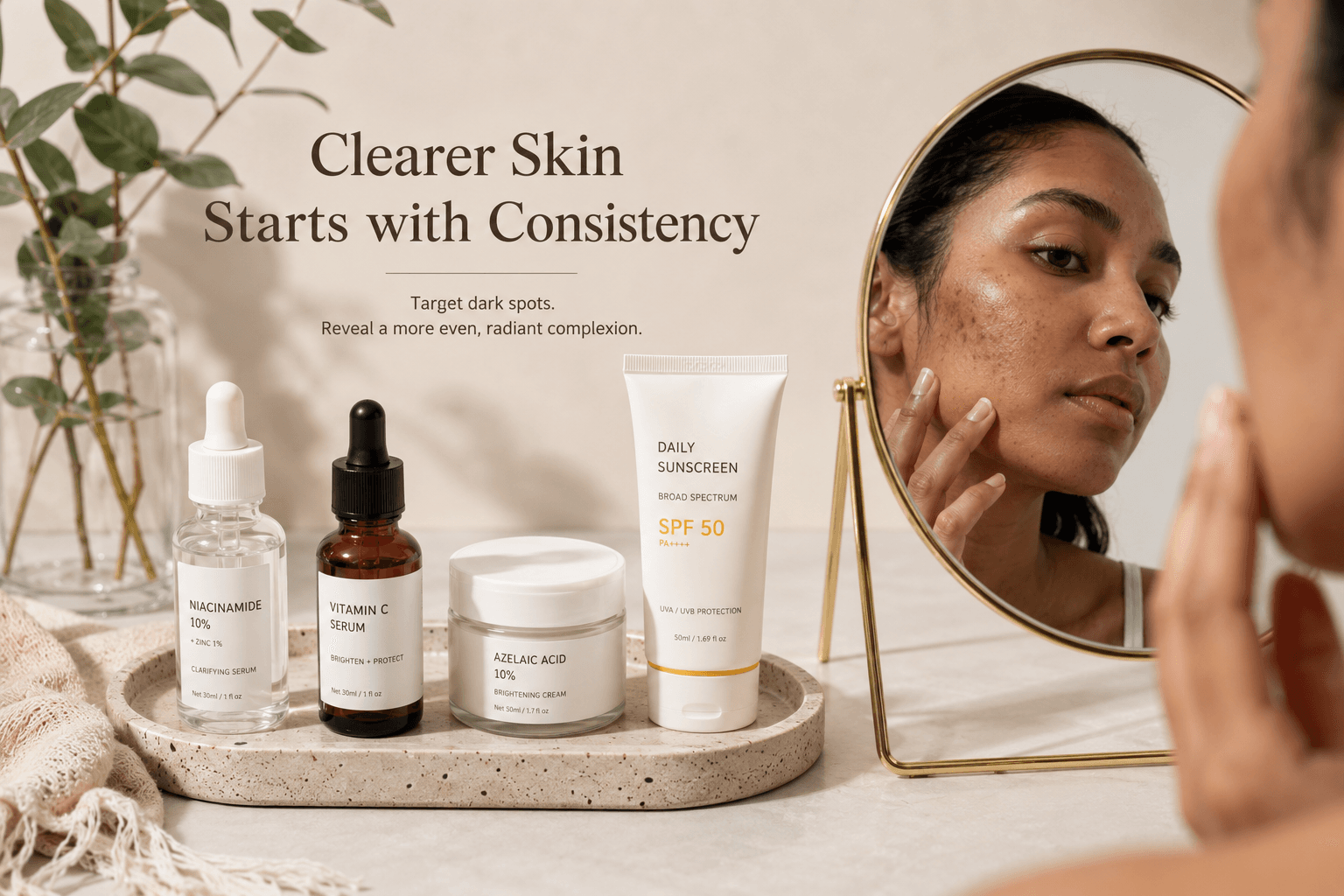
How to Get Rid of Dark Spots and Hyperpigmentation: What Actually Works?
Struggling with dark spots or uneven skin tone? Learn what causes hyperpigmentation, which skincare ingredients can help fade dark spots, what to avoid, and how to build a simple routine for brighter, more even-looking skin.
Dark spots can be frustrating, especially when they remain long after a breakout or skin irritation has healed.
Hyperpigmentation happens when certain areas of the skin produce more melanin than the surrounding skin. The result can be brown, grey, or darker patches that make your complexion appear uneven.
The good news is that many types of dark spots can gradually fade with the right skincare routine. The key is understanding what's causing them, choosing appropriate ingredients, and protecting your skin from further sun exposure.
This guide covers what actually helps, what to avoid, and how to build a simple routine for a more even-looking complexion.
Table of Contents
What Is Hyperpigmentation?
What Causes Dark Spots?
Can Dark Spots Go Away?
Best Ingredients for Dark Spots
Morning Routine for Hyperpigmentation
Night Routine for Hyperpigmentation
What Makes Hyperpigmentation Worse?
How Long Does Hyperpigmentation Take to Fade?
Frequently Asked Questions
Final Thoughts
Disclaimer
What Is Hyperpigmentation?
Hyperpigmentation is a general term for areas of skin that become darker than the surrounding skin because of increased melanin production.
It can appear as:
Dark spots after acne
Sun spots
Uneven patches of pigmentation
Marks following irritation or injury
Melasma
Not all pigmentation has the same cause, which means the best approach can differ from person to person.
What Causes Dark Spots?
Acne and Inflammation
A breakout can leave behind a flat brown or darker mark after the blemish heals. This is known as post-inflammatory hyperpigmentation.
Picking or squeezing spots can increase inflammation and make these marks more noticeable.
Sun Exposure
UV exposure can stimulate melanin production and make existing pigmentation darker.
This is why sunscreen is one of the most important parts of any routine targeting dark spots.
Hormonal Changes
Hormonal changes can contribute to melasma, which often appears as symmetrical patches of pigmentation on the face.
Melasma can be more difficult to manage with skincare alone, so professional guidance may be appropriate.
Skin Irritation
Cuts, burns, aggressive exfoliation, certain cosmetic treatments, and irritating skincare products can sometimes leave pigmentation after the skin heals.
Can Dark Spots Go Away?
Some dark spots gradually fade, particularly post-inflammatory marks left by acne or minor irritation.
However, results depend on:
The cause of the pigmentation
How deep the pigmentation is
Your skin tone
Sun exposure
Your skincare routine
How consistently you use your products
The goal should be gradual improvement rather than expecting pigmentation to disappear overnight.
Quick Tip: If you're trying to fade dark spots but aren't using sunscreen consistently, start there. UV exposure can make pigmentation darker and undermine the progress of the rest of your routine.
Best Ingredients for Dark Spots
You don't need to use every brightening ingredient at once. Choose one or two based on your skin's needs.
Vitamin C
Vitamin C is an antioxidant commonly used to brighten the appearance of the skin and improve uneven skin tone.
It works particularly well as part of a morning routine alongside sunscreen.
Best for: Dullness and uneven-looking skin tone.
Niacinamide
Niacinamide is a form of vitamin B3 that can support the skin barrier while helping improve the appearance of uneven pigmentation.
It is generally easy to incorporate into both morning and evening routines.
Best for: Uneven tone, oily skin, and people who want a gentle option.
Retinoids
Retinol is a cosmetic retinoid commonly used to support skin renewal and improve the appearance of uneven tone, fine lines, and texture. Stronger retinoids may require medical guidance depending on the product and country. Start slowly, especially if you've never used retinol before.
Best for: Dark spots combined with acne, texture, or signs of ageing.
Retinoids can cause irritation and are not suitable for everyone. Follow product instructions and seek professional advice if you are unsure whether they are appropriate for you.
Pregnant or breastfeeding? Speak with a qualified healthcare professional before using retinoids or other strong active ingredients.
Alpha Hydroxy Acids
AHAs such as Glycolic Acid and Lactic Acid exfoliate the surface of the skin and may gradually improve uneven tone and texture.
Avoid over-exfoliating. Irritation can make pigmentation worse.
Best for: Dullness, texture, and superficial pigmentation.
Azelaic Acid
Azelaic Acid is another ingredient commonly used for uneven skin tone and blemish-prone skin.
It can be particularly useful when pigmentation appears after breakouts.
Best for: Post-acne marks and uneven tone.
Which Ingredient Should You Choose?
Your Main Concern | Ingredient to Consider |
|---|---|
Dark spots and dullness | Vitamin C |
Uneven tone and oily skin | Niacinamide |
Acne marks and breakouts | Azelaic Acid or Salicylic Acid |
Pigmentation and signs of ageing | Retinol |
Dull texture and superficial marks | Glycolic or Lactic Acid |
Preventing spots from becoming darker | Sunscreen |
You do not need all of these ingredients in the same routine.
In fact, using too many active ingredients can cause irritation and potentially make pigmentation more noticeable.
Morning Routine for Hyperpigmentation
Keep your morning routine simple.
Step 1: Gentle Cleanser
Cleanse without stripping your skin.
Step 2: Brightening Serum
Choose a serum containing an ingredient such as Vitamin C or Niacinamide.
Step 3: Moisturizer
Use a moisturizer suited to your skin type to support your skin barrier.
Step 4: Sunscreen
Finish every morning with a broad-spectrum sunscreen of SPF 30 or higher. Sun protection is one of the most important steps when managing hyperpigmentation because UV exposure can darken existing pigmentation and contribute to new uneven pigmentation.
Your routine should look like this:
Cleanser → Brightening Serum → Moisturizer → Sunscreen
Sunscreen is essential because UV exposure can darken existing pigmentation and contribute to new pigmentation.
Night Routine for Hyperpigmentation
Your evening routine can focus more heavily on targeted treatments.
Step 1: Cleanse
Remove makeup, sunscreen, oil, and impurities from the day.
Double cleanse if necessary.
Step 2: Treatment
Depending on your skin, this might include:
Retinol
Azelaic Acid
Niacinamide
An exfoliating acid
Avoid introducing several strong treatments at the same time.
Step 3: Moisturize
Finish with a moisturizer to help maintain a healthy skin barrier.
Your basic evening routine should look like:
Cleanser → Treatment → Moisturizer
Simple and consistent is better than complicated and irritating.
What Makes Hyperpigmentation Worse?
Skipping Sunscreen
This is one of the biggest mistakes.
UV exposure can deepen pigmentation and make dark spots more difficult to fade.
Picking at Breakouts
Picking increases inflammation and may increase the likelihood of a lingering mark.
Over-Exfoliating
More exfoliation does not mean faster results.
Overusing acids, scrubs, or other exfoliating products can damage the skin barrier and cause irritation.
Using Too Many Active Ingredients
When introducing a new active ingredient, consider patch testing it first and introduce one new product at a time. This makes it easier to identify irritation or sensitivity.
Constantly Changing Products
Pigmentation usually requires patience. Switching products every week makes it difficult to determine what's actually working.
How Long Does Hyperpigmentation Take to Fade?
There is no universal timeline.
Some superficial marks may begin improving within several weeks, while deeper or more persistent pigmentation can take months.
Certain conditions, including melasma, can also return or worsen following sun exposure and hormonal changes.
Rather than focusing on instant results, look for gradual improvements in:
Darkness of individual spots
Overall skin tone
Texture
Number of new marks appearing
Take a photo in similar lighting every few weeks if you want a more objective way to track progress.
Frequently Asked Questions
What is the fastest way to fade dark spots?
There is no overnight solution. For many types of hyperpigmentation, consistent daily sunscreen combined with an appropriate ingredient such as Vitamin C, Niacinamide, Azelaic Acid, or a suitable retinoid can gradually improve the appearance of dark spots. The best approach depends on what caused the pigmentation.
Does Vitamin C remove dark spots?
Vitamin C can help improve the appearance of uneven pigmentation over time, but results vary. It should not be expected to remove every type of dark spot completely.
Is Niacinamide good for hyperpigmentation?
Niacinamide can help improve uneven-looking skin tone while supporting the skin barrier, making it a popular option for people who want a relatively gentle ingredient.
Can Retinol fade dark spots?
Retinol can improve uneven pigmentation over time by supporting skin cell turnover. Introduce it gradually because irritation can occur.
Can I use Vitamin C and Niacinamide together?
Many modern formulations can be used within the same routine. If your skin is sensitive or you're introducing new products, starting with one ingredient at a time makes it easier to monitor your skin's response.
Should I exfoliate dark spots every day?
No. Excessive exfoliation can irritate the skin and potentially worsen pigmentation. Follow the directions of your chosen product and adjust based on how your skin responds.
Do acne dark spots eventually disappear?
Many post-inflammatory marks gradually become less noticeable, although the time required varies significantly.
When should I see a dermatologist?
Consider professional assessment if pigmentation appears suddenly, changes noticeably, is persistent despite appropriate skincare, covers a significant area, or if you are unsure what is causing it. Any new or changing skin lesion should also be assessed by an appropriate healthcare professional.
Final Thoughts
Getting rid of dark spots is rarely about finding one miracle product.
A good routine focuses on three things:
Protecting your skin from UV exposure
Using one or two appropriate ingredients consistently
Avoiding unnecessary irritation
For many people, a simple routine consisting of cleanser, targeted serum, moisturizer, and daily sunscreen is a better starting point than combining numerous active ingredients.
At Today's Cosmetics, our goal is to help you make informed skincare choices. Explore our skincare collection to find cleansers, serums, moisturizers, and sun protection suited to your skin type and routine.
Disclaimer
This article is provided for general educational and informational purposes only and is not medical advice. Skin concerns and treatment needs vary between individuals. If your pigmentation is severe, persistent, changing, or causing concern, consult a qualified dermatologist or healthcare professional for appropriate diagnosis and treatment. If your situation involves a legal issue, such as consumer rights or product liability, seek advice from a qualified legal professional.
Enjoyed this article?
Share it with someone who loves great skincare.
More to read
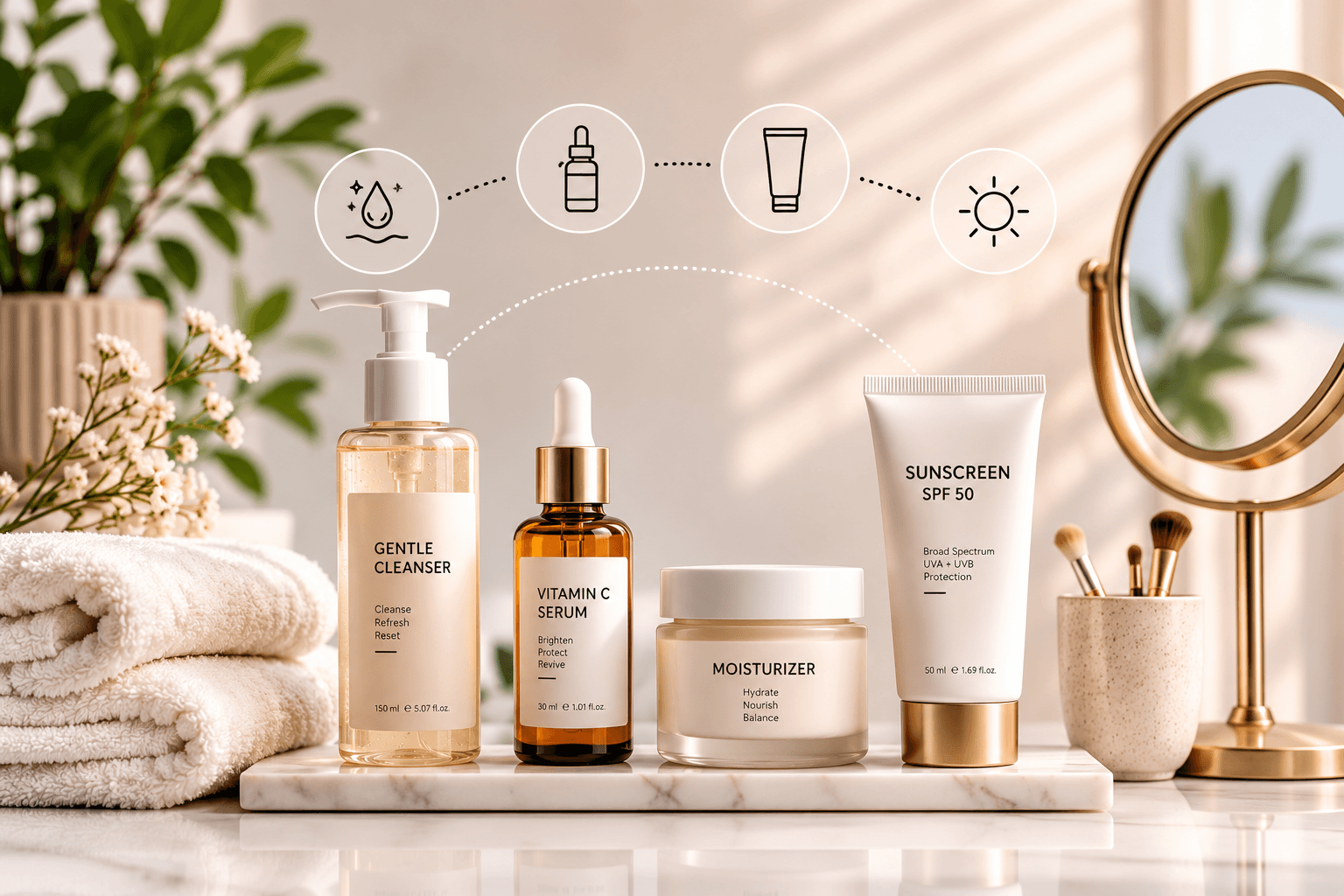
How to Build the Perfect Skincare Routine (Morning & Night) for Every Skin Type
Discover how to build the perfect morning and night skincare routine for your skin type. Learn the correct order to apply skincare...
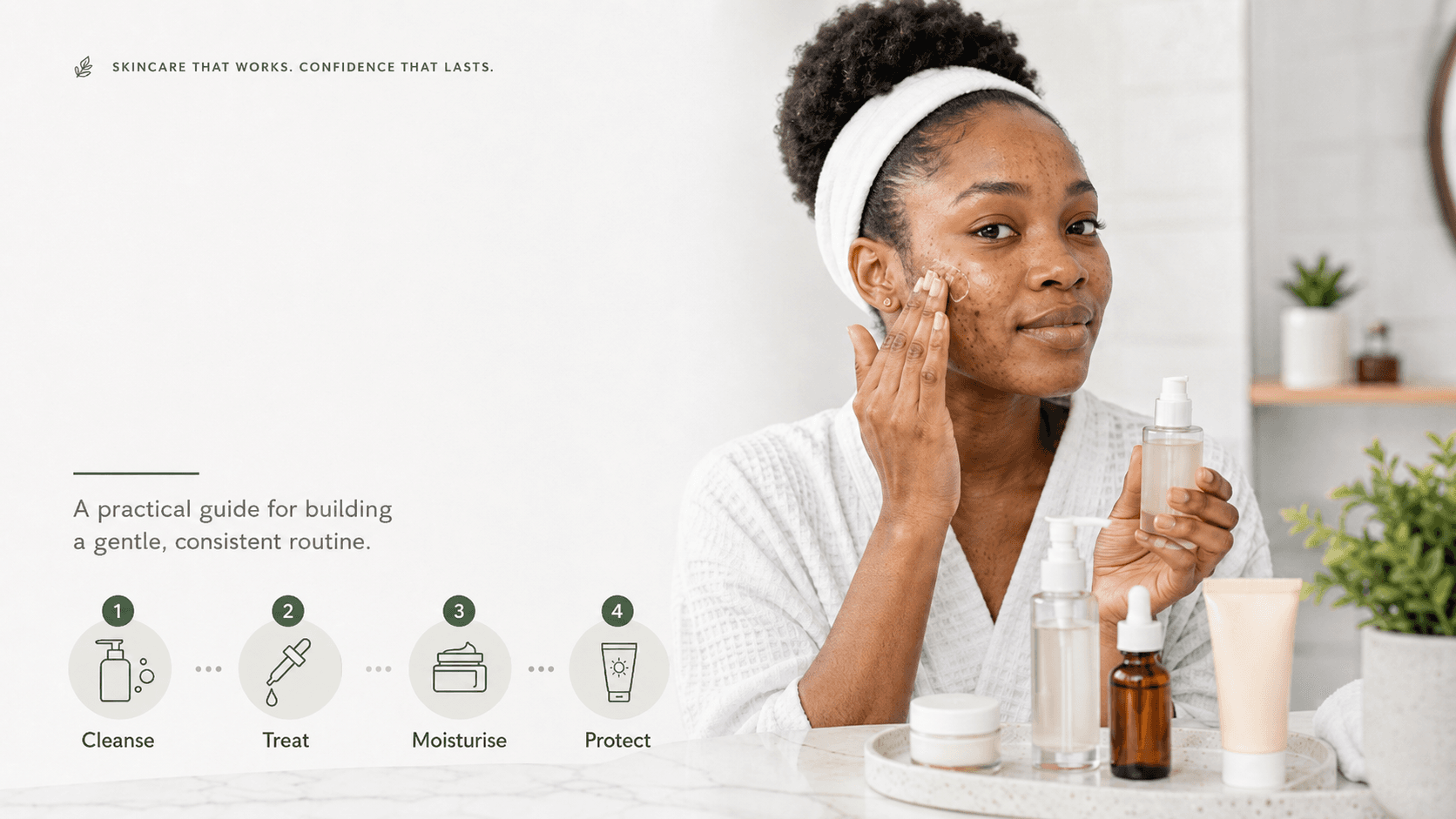
Skincare Routine for Acne-Prone Skin: What to Use, What to Avoid
Build a simple skincare routine for acne-prone skin with clear morning and evening steps, ingredient guidance, and practical tips...